
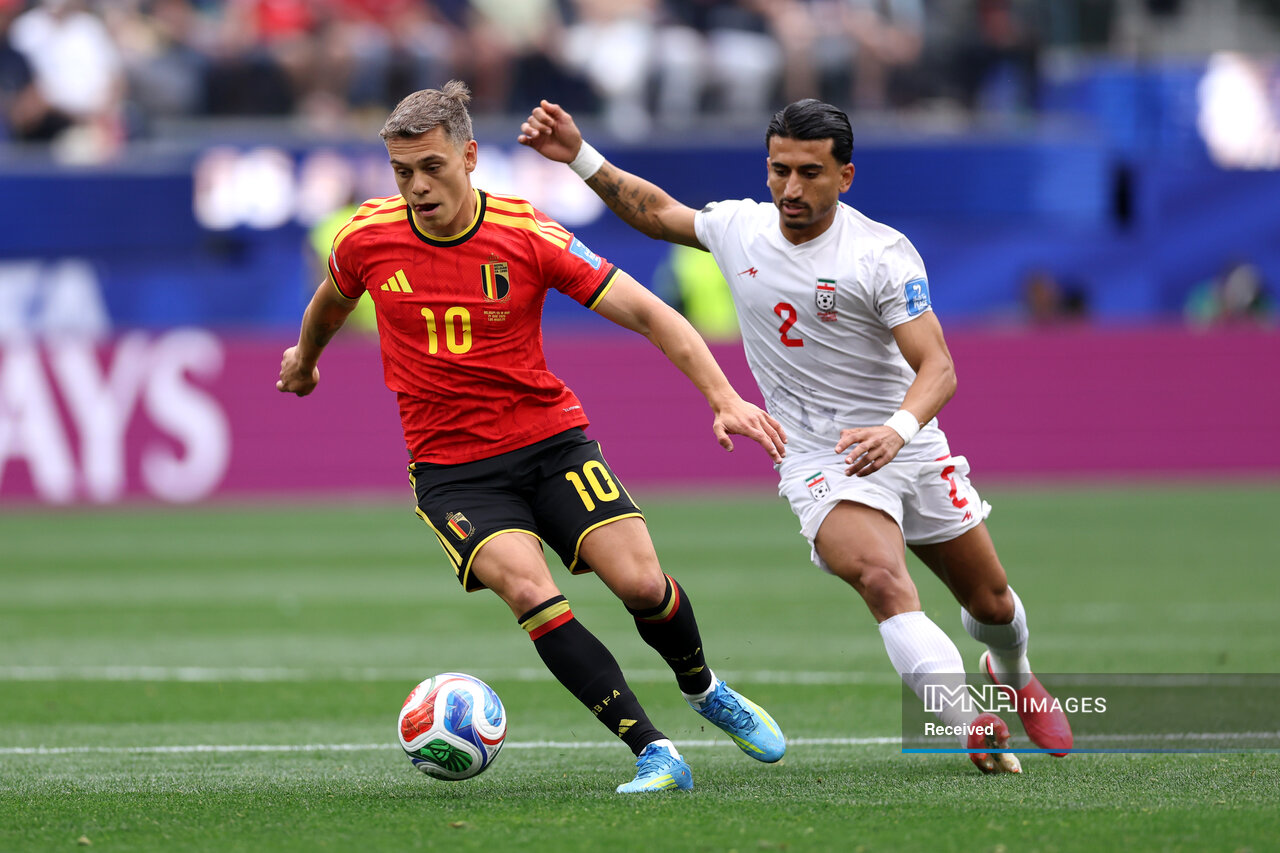
According to Imna news agency, Iran’s national football team lined up against Belgium in the second week of the 2026 World Cup after a 2-2 draw against New Zealand in the first week of the 2026 World Cup, and the match between the two teams ended in a goalless draw. In this critical battle, Mehdi Tarimi opened Courtois’ goal in the 25th minute on Ehsan Hajsafi’s free kick, but his goal was disallowed due to offside.
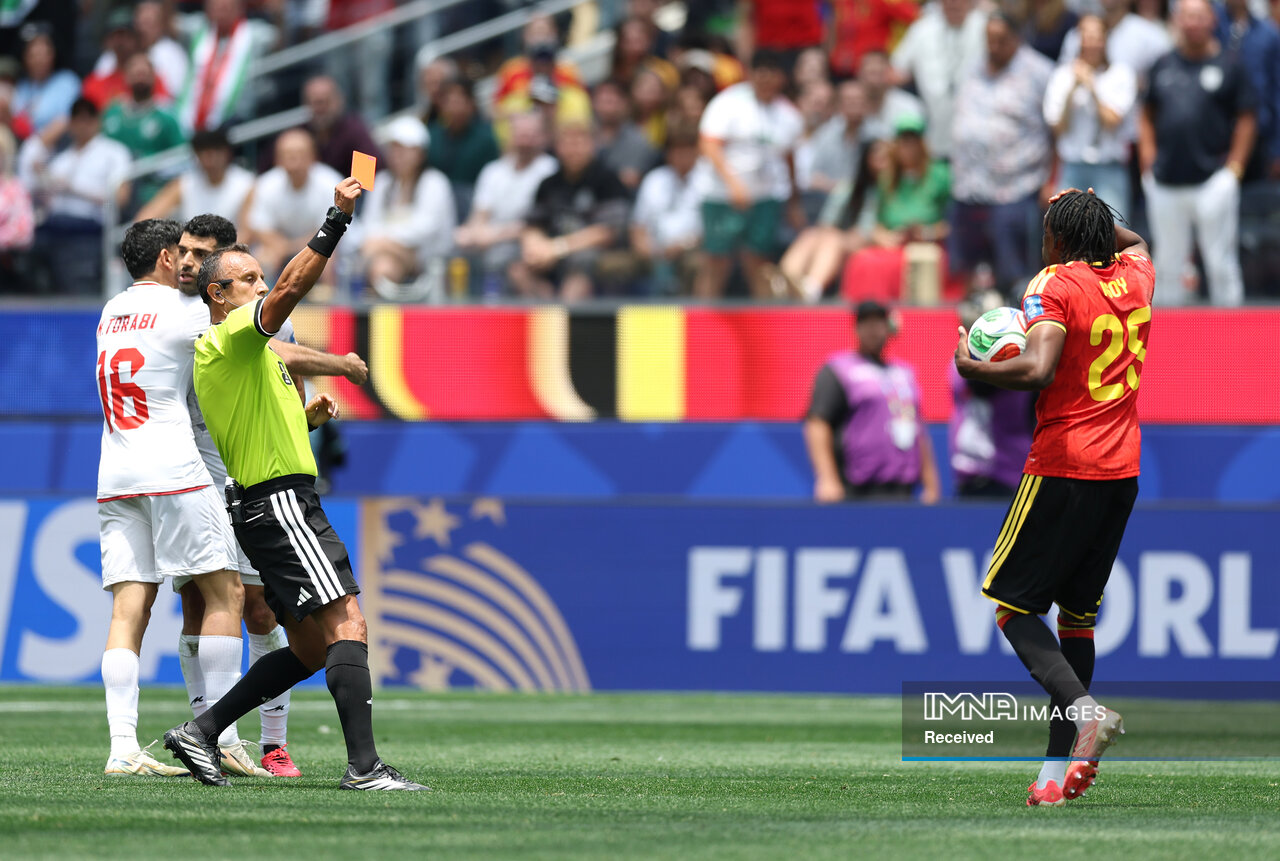
Although in this match, Belgium was the owner of the ball and the field, but in the second half, with the dismissal of the defender of this team, they followed the game with 10 players, however, the general’s students did not manage to return the result of the game to their advantage.
The defensive game against Belgium was normal
Hoten Nagari, expert analyst and football teacher of our country In an interview with Imna’s reporter, analyzing the confrontation between Iran and Belgium, he said: “It was natural to enter the field against a team like Belgium with a defensive approach, and I was also in favor of implementing a defensive style, but the problem is that we should not have thought only about defense.” If we carefully examine the game, especially in the first half and before Belgium’s 10-men in the 66th minute, we will find that Iran was actually playing with a 1-4-5 system. Ehsan Hajsafi, who was next to Saeed Ezzatollahi, was added to the defense line when Belgium attacked and was next to the defenders. As a result, the team’s composition would be five defenders, four midfielders and one striker.
He added: There is no problem in itself, because we were playing against Belgium and it was natural to enter the match with a defensive structure. We achieved our goal to a large extent, but there is a question, were we just practicing defending? Was all our football just defending or did we have a plan for attack? If you review the first half, you will notice that whenever our players had the ball and won possession, they were passing the ball into the opponent’s field without a goal. Even the rejection of our balls was not targeted in many cases and only the ball went away from the danger zone.
Why should Jahanbakhsh play?
The football analyst of our country stated: Another thing I criticize is the use of Saleh Hardani, of course, it seems that the technical staff noticed this issue between the two halves and corrected it, but my question is, why did Alireza Jahanbakhsh enter the field after Saleh Hardani left? Hardani had problems in the defensive phase, we were hit many times from the space behind him and the space on the right side of the national team was at the disposal of the opponent. The Belgians were easily penetrating from that side.
He continued: But the biggest ambiguity for me is that when you enter Ramin Rezaian instead of Saleh Hardani, why should Jahanbakhsh play? Weren’t we supposed to have a plan on counterattacks? One of the most important counterattack tools is the use of speed players. Is Jahanbakhsh considered a fast player in the current situation?
Ngari stated: Why was Mehdi Qaidi not used? Why didn’t Hosseinzadeh or Denis Dargahi have the opportunity to be on the field early? On the other hand, we hold all our matches with a fixed frame and fixed composition, and this is strange. Anyone who follows the national team already knows which player is going to play for Iran and this is a big weakness for our country’s team.
The game against New Zealand and Belgium is not comparable
The football analyst of our country noted: If we examine the composition of the national team and separate defensive players and defensive midfielders from other players, we will find that most of the players on the field were defenders or defensive midfielders. I have already said that Ramin Rezaian is a very good player. Apart from the efforts of the players and the brilliance of Alireza Biranvand, who undoubtedly had a wonderful performance and there is no need to explain more about him, I must also mention Shoja Khalilzadeh’s performance. Although Shoja Khalilzadeh is in the final years of his football career, he played a very good game and had a significant defensive performance. I can even say that if the brilliant Biranund had not appeared, Shoja Khalilzadeh would have been one of the most serious options for the title of the best Iranian player in this match.
He said: If we want to compare the game against Belgium with the game against New Zealand from a defensive point of view, we should note that the conditions of these two games were completely different. Against Belgium, Iran’s national team was completely in the defensive phase, and there was no clear plan other than defending in our country’s team. About the game against New Zealand, it should be said that when a team attacks, it is natural to become vulnerable in counterattacks, the spaces increase and the distance between the lines increases.
Nari reminded: But in the match against Belgium, the conditions of the national team were different. Belgium easily advanced to the back of Iran’s penalty area and from that point onwards faced Iran’s compact defensive structure. In such scenes, Iran played with five defenders, four midfielders and one striker. For this reason, I believe that comparing the performance of Iran’s defense line in these two matches is not very correct, because the tactical conditions of the two games were different.
We had no plans to attack
Our country’s football analyst added: Another problem in the composition and system of the national team was the presence of Mohebi in the left winger position. If you watch the game again, even the match reporter rarely mentions Mohebi’s name. This shows that he did not have much influence during the match. The second point, which I mentioned earlier, is that it seems that the national team did not have training for attack. It seems that our whole plan was to defend only against Belgium. Maybe even the technical staff didn’t imagine that Belgium would be down to ten players with what happened in the game or that the conditions of the match would progress in such a way that Iran could use its offensive plan.
He reminded: The reality is that whenever we had the ball, we had no specific plan, pattern or plan to approach the opponent’s goal, create a position or execute a counterattack. Qalanewi’s men were confused when in possession and there was no sign of a pre-rehearsed attacking plan in their style of play. Another question for me is the technical staff changes in both matches.
Ngari added: I don’t know on what basis the changes were made. In the first game, Shahriar Maghanlou came on the field very early and entered the field as a substitute in the match against Belgium, but the question is, what do we expect to happen when we bring Shahriar Maghanlou into the field? He is supposed to score for the team, but for about 40 minutes he was on the field, he made almost no effective connection with the ball. Did we have a player to pass to? Was there an app that used Maghanloo’s features? None of these things happened.
Today’s football is not just defending
Our country’s football analyst stated: The same issue applies to other substitutions such as the presence of Mehdi Torabi and Hosseinzadeh in the final minutes of the match. The question is really raised as to why such decisions are made and what effect these substitutions are supposed to have on the game. A player at the national level and present in the World Cup must be fully aware of the rules of football day.
Ngari continued: In a situation where Belgium had 10 players, Ezzatullahi tried to kill time, and as a result, Iran continued to play with 10 players for a few minutes. I don’t know if the new rules were explained to the players. When a player at that level of football is not aware of the new rules, he may put his team in trouble. We played the same five-six minutes as 10-man Belgium and there was a chance we would have conceded a goal in the same amount of time.
He added: Today’s football is not just defending. In the past, we heard the term “defending the bus” a lot, but at the level of the World Cup, this style alone is not the answer. In several games of this tournament, we have seen many times that despite the defensive approach, the teams are not limited to defending only. They have a plan and organization, they actually know when to sit back and when to attack. They enter the attacking phase with the least number of passes and create opportunities. Keyword is a clear example of this method.
Why Shahriar Mughanlou?
The football analyst of our country said: such cases are not seen in our national team, either these issues have not been practiced, or the conditions of the matches do not allow it to be implemented, or most importantly, the average age of the team has caused us not to have the necessary speed in counterattacks. A big question still remains for me; Why is Mehdi Qaidi not used? One of the most important components of the counterattack is to have a fast player, currently the fastest player of the Iranian national team is Mehdi Qaidi, so why don’t we use him?
He pointed out: Wasn’t it reasonable for Qaidi to enter the field instead of Shahriar Mughanloo? Couldn’t he help the team in open spaces? Qaidi has a high ability in one-on-one battles, has considerable speed and is considered a high-quality player in the final shots. For this reason, I believe that some of the decisions made on the bench of the national team not only do not help the team, but sometimes end up harming the team of our country.
We will have problems against Egypt
Negari clarified: I am sure that if we enter the field with the same strategy against Egypt, we will face a problem. I even believe that if Belgium did not have 10 players in that scene, the result of the match probably would not have ended in a draw. It’s natural that everyone was happy when Tarami scored a goal and at the same time they were sad about it being rejected, but if we want to look at the scene from a technical point of view, I don’t believe that this goal was the result of a tactical plan.
He reminded: If you have seen the pictures behind the goal, Mehdi Tarimi was in a suitable space without any special disturbance in that scene and no player was able to restrain him effectively. In such a situation, any player who has the necessary intelligence can recognize that space and hit. For this reason, at first glance, this scene seems to be the result of the individual intelligence of the players and the proper use of the available space, and not the result of a pre-rehearsed move.
Iran’s goal was scored based on creativity
Our country’s football analyst said: I don’t think Iran’s missed goal is the result of a training program. If such a move had been practiced, we should have seen signs of it in the past games of our country’s team or at least in friendly matches. When a team works on free kicks or combination moves, that program is repeated throughout different matches and not limited to just one stage. In the last few matches of the national team, we did not see any clear signs of team work or practiced free kicks. When a movement is practiced, it is usually repeated several times.
He added: In that particular scene, Ehsan Hajsafi recognized the right space with his high intelligence and sent a good pass to Tarimi. Unfortunately for us, the situation progressed in such a way that the goal was declared disallowed, but I believe that this scene was more the result of the individual intelligence of the players and not the result of a pre-planned plan. When working on passing and moving players, there are two very important components: environmental awareness and movement without the ball; The biggest drawback of the Iranian national team is that as soon as the ball is in possession, the first choice of the players is to throw it away.
We did not create enough chances
Nari noted: If you review the first half of the game against Belgium, almost every player who had the ball either sent the ball out of the field aimlessly or transferred it to the opponent’s field with a long pass. This problem continued in the second half after the opponent was reduced to ten players. We didn’t move enough, we didn’t get into the right spaces and we didn’t create passing options, because of that the second and third passes of the team were not formed and the possession of the ball was lost quickly.
He clarified: Even though the Belgian team had one less player, in many minutes it felt that they had more people on the field than Iran. The reason for this problem was the high quality of the placement of the players, environmental awareness and continuous presence in the right spaces. The opposing players knew well where to be and how to put themselves in the path of the player with the ball.
The head coach of Belgium also had some mistakes
The football analyst of our country said about the weaknesses of Belgium in this match: In my opinion, one of the important mistakes of the head coach of Belgium was the use of Romelu Lukaku in this match. When he knows that a team like Iran plays with a defensive structure, he needs to pay attention to the fact that he needs a striker who can receive the ball in limited spaces, turn and strike quickly. Lukaku is very good at using his physical strength and keeping the ball, and he performs well in physical battles, but his main attribute is not turning quickly in confined spaces.
Negari stated: “During the game, we observed many times that he kept the ball and put his body in front of our defenders, but when he tried to turn and hit, the Iranian defenders took the ball away from him.” I believe that if a player with different characteristics and higher speed was present in that area, the situation would be more difficult for Iran’s defense line. It can even be said that Iran was lucky that Jeremy Duko was not present in this match, because he could have created many problems for the defensive structure of our country’s team with his speed and individual abilities.
He stated: I hope that the conditions for our country’s team will be different in the future matches and we will see more goals and opportunities, but I would like to emphasize again that I wish there was more trust in the young players. Players like Kasri Taheri and Ismail Qolizadeh can add more energy and vitality to the team. I believe that the right decision was not made even about Omid Ilhafoken’s crossing the line. He is one of the best shooters in Iranian football and could help the team in such matches with a long shot. We all know that in Iranian football, there are few players who shoot with his quality.