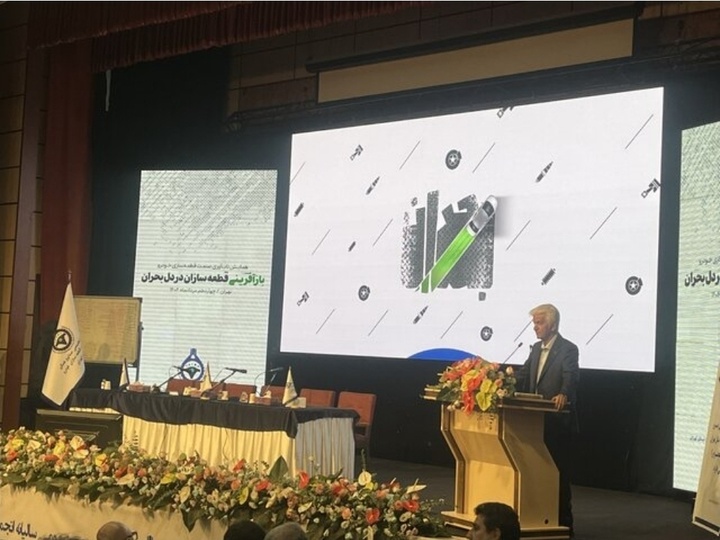
Mohammad Reza Najafi Manesh stated at the Conference on Automotive Component Industry: “As the Iranian parts industry is dealing with a crisis of liquidity, a decline in production and the adjustment of power, the government has reduced the car import tariff.”
He emphasized that the preference of car imports over domestic production has sounded the alarm of dependence and stagnation for the principle.
The head of the Tehran Society of Homogeneous Industries and Manufacturers of Tehran province strongly criticized the government’s approach to determining car import tariffs and parts.
Referring to the executive bylaws, he added: “While the budget law has set the car import tariff of 5 %, the government has declared it at least 2 % in bylaws; This figure is even lower than last year’s 5 % tariff, and this is contrary to the law and the interests of domestic production.
Najafi Manesh stated: The import tariff, which is a part of the car, should be lower than the full car tariff, but now we see higher tariffs that are not only for the benefit of importers, but to the detriment of Iranian parts makers and provide widespread Chinese quality.
Criticizing the critical situation of domestic parts makers, he noted: We have companies with a history of 5 to 5 years of business in the industry that are on the verge of adjustment today due to serious financial problems.
Najafi Manesh also pointed to the index of the purchase managers (Shamkh), adding that the index should be at least 2 % to say that the situation is in balance, but today in the overall industry we have reached about 2 % and in the automotive industry, only 2 %, which is a worrying figure and needs urgent reaction.
He also complained about the government’s grammatical pricing on cars and Afrud: Despite the sharp rise in production costs, it has agreed to only a 5 % increase in car prices, without the government compensating for the loss of producers. If it is supposed to be a grammatical pricing, it should be paid for, but not even a single rial has been offset.
Referring to the involvement of four institutions in the automotive industry, the president of the Iranian Association of Manufacturers criticized the lack of a single management and continued: “The car pricing between the Competition Council and the Support Organization is wandering, while both sides convey the pressure to the manufacturer only.”
Referring to the accumulated losses of the country’s automakers, Najafi Manesh considered one of the most serious crises to be a lack of liquidity, the limitation of foreign exchange resources and raw materials, and called for government confidence in the private sector and the implementation of real support policies for the automotive industry and segmentation.
Two months until a complete stop; Carmakers on the verge of collapse
The vice -president of the Tehran Participants Association also warned of the currency crisis and instability in policymaking, saying that manufacturers have a piece for the next two months, and as the process continues, the car production chain will be on the verge of a complete stop.
Amir Hossein Jalali, referring to the work of the Tehran Association, stated: Four years ago, our association was only on paper, but today, with the efforts of the members, we have reached a stage where elections, communities and specialized conferences are held regularly.
He pointed out that by the middle of the year, production conditions were manageable, adding that the sheet returned from late last year, along with changes in foreign exchange policies. From now on, the manufacturer must approve of two automakers to allocate the currency! The result of this policy? A 5 % decrease in production in many units.
Production Chain Undoubtedly?
Jalali also addressed details of the import process and said: “The currency is allocated in the final days of the year, such as March 6, but the time is lost with Nowruz holidays.” Then we have to secure the rial, make an order registration, look for a bill of lading; It also with a thousand barriers. In practice, production is asleep.
“We still do not know what the currency is distributed,” he said. Some days, Friday, in different cities, 2 to 5 people queue up to track their currency allocation. This means complete disorder.
The vice president of the Tehran Association criticized some of the spaces against domestic production, stating: “It is as if we are preventing the import of cars.” While importers import cars for $ 5 to $ 5,000 and double in Iran. These cars are neither accessible nor replacement for domestic production. But the criticism is to us; Not them.
Only two more months have the opportunity
He warned: We now have only one to two months for the next one to two months. The main reason is the inability to supply currency and working capital. This is the alarm for the whole industry; Not just for us.
Why are the inputs free but not the car?
Jalali also said about grammatical pricing policy: When petrochemicals and steel are new prices every day, why should the price of the car remain constant? This equation is irrational. If the inputs are released, the car should also be available at a real price. We are even ready to work in free currency, just our task is clear.
Warnings that were not heard
Referring to the unanswered follow -up of the Association, he noted: “We have repeatedly sent letters, we have had meetings, warned. From high interest rates to banking problems and production chain, we didn’t respond. Now the makers will reduce one force, and this gradual collapse will be irreparable if not contained.
Iran Khodro on the Green Road; ۲۵۰ A thousand hybrid cars on the way
The CEO of Iran Khodro Industrial Group also announced the launch of a new season in Iranian automotive production with mass production of hybrid cars at the conference on “Automotive Components Industry” conference, emphasizing the key role of parts makers in keeping the automotive industry alive.
Mehdi Pirmohammadi criticized crude policies, deferred demands and weaknesses in support of final production.
Referring to the challenges of recent years in automotive, he described the parts of the industry as the backbone of the industry and said: “At the time the automotive industry was on the verge of stopping, it was the makers who stood and did not allow production lights to shut down.”
Criticism of crude policies
The CEO of Iran Khodro criticized the priority of economic policies in the country: Sustainable economic growth depends on the increase in production production, not crude. In many sectors, the policy maker focus on export of raw materials; Not support for value -added production.
Repayment of claims; A step towards supply chain repair
Pirmohammadi, referring to the improvement of financial interactions in Iran, added: “We have had problems with the demands of the manufacturers in periods. With the help of the Board of Directors and the support of banks, this situation has been largely organized. Today, negotiations with the central bank are underway to provide our funds to the supply chain.
Hybrid, the future key of Iran Khodro
The CEO of Iran Khodro further announced the company’s serious entry into the market for clean and clean cars, saying: “In the next three years, we have targeted the production of about 6,000 hybrid vehicles.” This path is part of our strategy for sustainable development and reduction of emissions in the transportation industry.
Industry in the siege of crisis; Tehran Director General of Semit
The Director General of Industry, Mining and Commerce of Tehran also called for ending grammatical pricing, reforming currency mechanisms and serious support for parts by describing the current state of production as the most difficult industrial era in the country in the last three decades; Industries that he called the “irregular army of economics”.
Mahmoud Sijani, referring to the complicated economic and industrial situation of the country, said, “In the 5 years of experience in the Ministry of Health, I have never seen so much pressure and crisis.”
“Increasing energy costs, currency and banking problems and confusion in policymaking have brought production to the erosion border,” he said.
Partners, the forgotten column of the automotive industry
“You carried out the main burden of employment and production, but you are at war without support,” Sijani emphasized the key role in the automotive industry.
The Director General of Industry, Mining and Commerce of Tehran province urged officials to replace real support measures more seriously with this sector.
Finish the grammatical pricing
According to him, the implementation of an important paragraph of Article 7 of the Seventh Development Plan may be the end point of grammatical pricing; Because many pieces are neither subsidized nor subject to monopoly.
“This is a legal capacity that the associations must act to use,” he said.
Temporary opportunity in the heart of the crisis
The Director General of Tehran also pointed to the directive of the government that allowed some of the goods without currency transfer and said: “This opportunity is temporary, but it is used in Tehran province and other provinces can benefit.”
Referring to the meetings with judicial authorities to examine the problems of the components, Sijani said: “We are trying to bring the voice of industry to both the provincial and national level.” Today, the industry needs decisive decisions and practical support more than ever.
Makers in the stalemate of policies; Parliament warning to state
While the Iranian fragmentation industry has been difficult to undermine under the burden of foreign currency, financial and deferred demands, a member of the Majlis Committee on Industries and Mines warned the government to take action instead of promising.
Mohammad Rostami also emphasized at the Automotive Component Conference: If the maker fails, the automotive will also collapse; Today is not the time of the slogan, but the time of urgent decisions.
Fractional; The underlying stone of the automotive industry grinding
A member of parliament and a member of the Committee on Industries and Mines, referring to the fundamental role of the car makers, stated: The country’s car industry stands on the shoulders of the makers. If this key loop collapses, the automotive chain will also collapse.
Recalling three years of resilience of activists in the field against consecutive currency crises, sanctions and banking problems, he noted: If the automotive industry still lives, it is due to the resistance of producers who did not stop production with minimal facilities.
Segmentation, victim of volatile fluctuations and policies
Criticizing the current situation, Rostami said: “In the field of economics, today’s main pressure is on the shoulder.
From the currency crisis to the uncertainty of pricing and deferred liabilities of automakers, there are all the wounds that the parts maker deal with.
He emphasized the role of parliament in legislation and supervision, adding: “This industry has been at risk of closing due to the defective structure of currency allocation and the lack of stability in large decisions. As people’s representatives, we are ready to pave the way for legal paths to support this industry.”
Parliament is ready to amend the law; Plan
A member of the Industrial Commission urged industrial organizations to clarify the path of targeted support for lawmakers by presenting operational and expert plans.
He added: “In the Seventh Development Plan, there are capacities to revise pricing policies and production support that must be properly activated.”
Rostami reiterated: “The segmentation is not just the supplier of the car maker; This industry is the focus of employment, innovation and technology transfer. Strengthening it means promoting the country’s economic security.
Promises are enough; It’s time to take action
“The producer no longer has repetitive promises,” he told the government. What is urgent today is liquidity injections, transparent currency allocation, and decision -making stabilization without these, the segmentation industry will reach the crisis stage.
Rostami emphasized that: Many makers are on the verge of bankruptcy, warning: “If the policymaker is not operating now, in the future it will have to respond to the collapse of the car production chain.”
Support for segmentation, guaranteeing automotive survival
He promised that the parliament will seriously put the issues related to the segmentation industry on the agenda of the Industrial Commission and will bring the voices of activists in the field to the public.
According to him, support for the carmaker is to support the whole automotive industry. If we want to remain a national automaker, we have to save the segmentation. And this salvation requires immediate action beyond stereotypical slogans.